Sustainable Community Development
The Kiso River: Lifeline of Trade and Transport by Water
Culture Shaped by River Trade
In towns across Japan that prospered through river trade, the ease of transporting goods by water fueled the growth of commerce and industry. In the brewing industry in particular, river transport played a vital role. In regions where sake, soy sauce, miso, and other fermented foods were actively produced, raw materials and finished products could be moved by boat, making it possible to supply wide-ranging markets. As a result, towns with well-developed river trade networks often saw the brewing industry become a significant pillar of their local economies.
In Yaotsu Town, production appears to have been largely directed toward local consumption or carried by horse and human porter from Kurose Port along the Kurose Kaidō road into the mountainous inland areas. Even today, near the site of Kurose Port — which once sat along the Kiso River flowing east to west along the southern edge of town — two local sake breweries remain: Kuramoto Yamada and Hanamori Shuzo Co., Ltd. The fermented foods tradition lives on as well, with Uchibori Brewing Co., Ltd., Misohira Brewing, and Inoue Brewing continuing to produce vinegar, miso, soy sauce, and other brewed products.
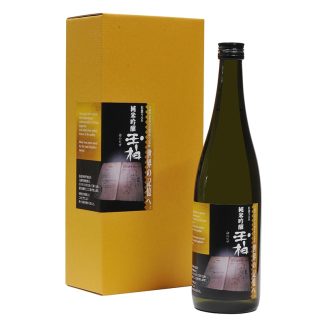
蔵元やまだ
Shop on YAOTSU MALL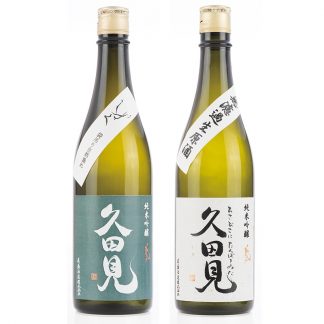
花盛酒造※販売店 満寿屋
Shop on YAOTSU MALL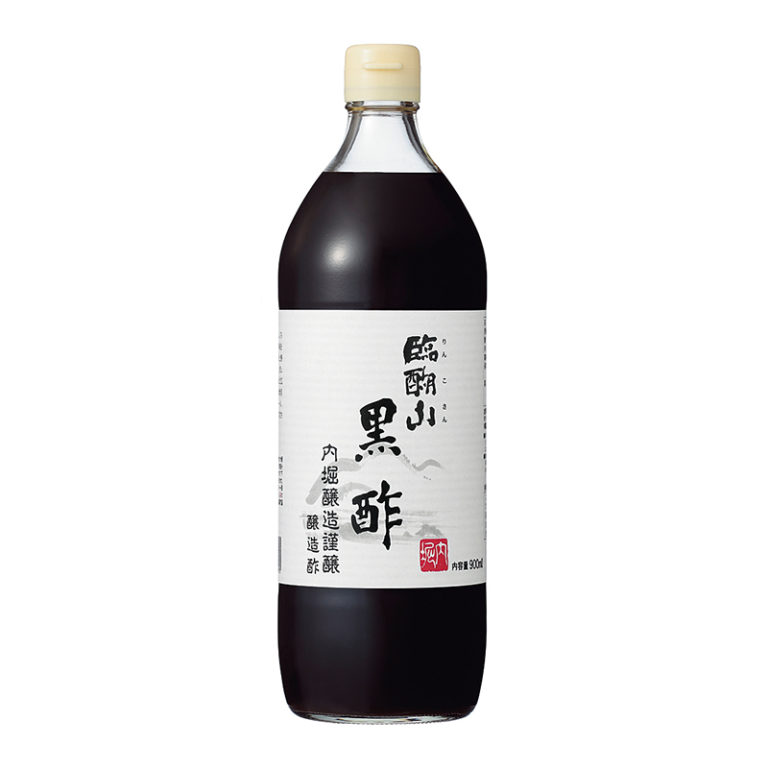
内堀醸造株式会社
Shop on YAOTSU MALL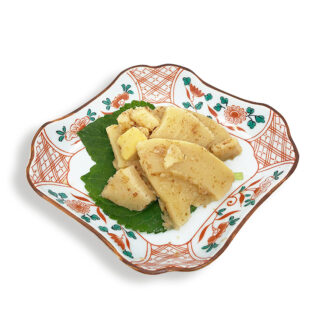
井上醸造
Shop on YAOTSU MALL
味噌平醸造株式会社
Shop on YAOTSU MALL
Kiso River Waterway
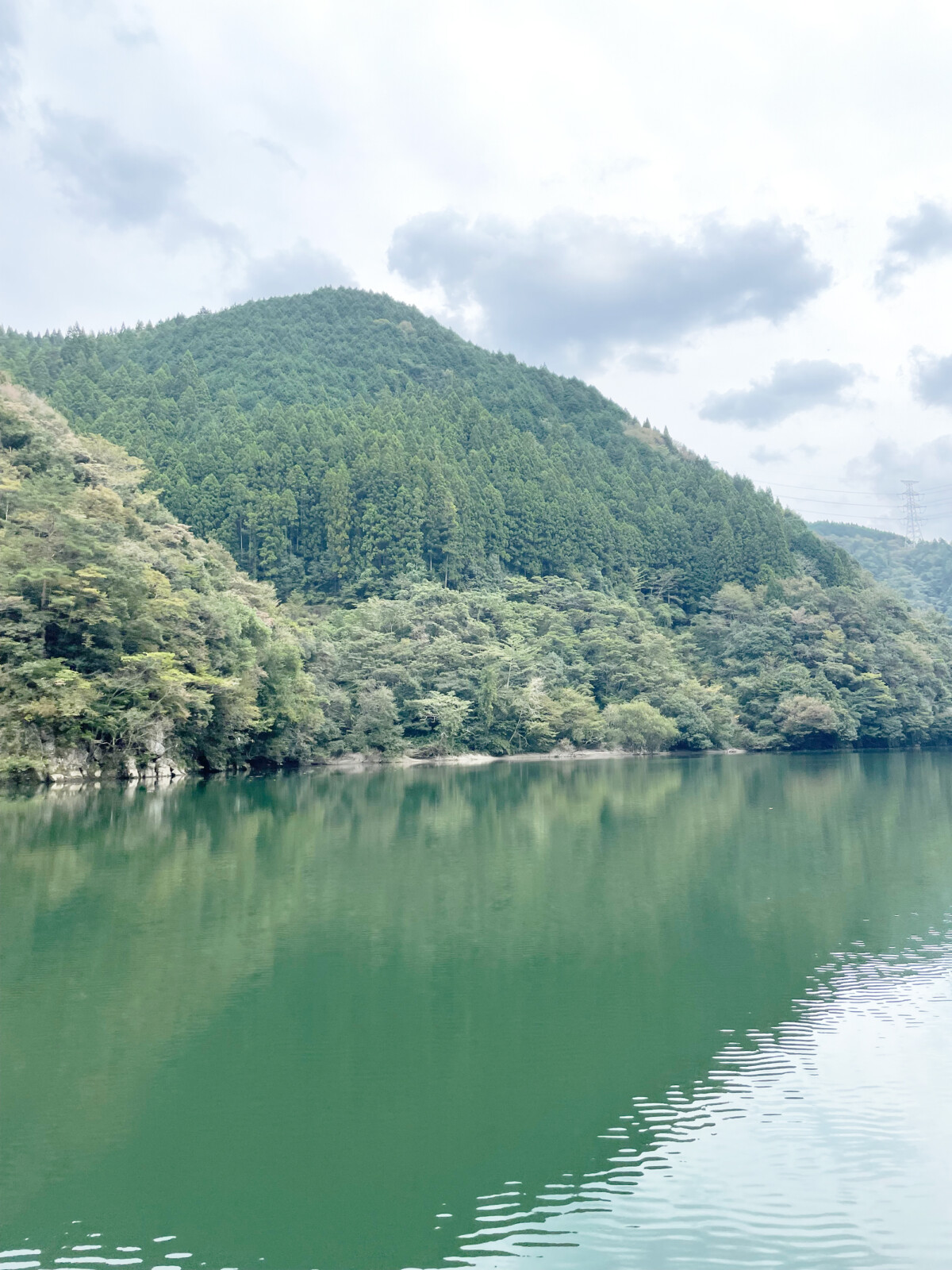
The Kiso River Waterway (Kisogawa Shuun) refers to the river transport network that developed along the Kiso River in Gifu Prefecture. Originating at Mount Hachimoriyama in Nagano Prefecture and flowing all the way to Nagoya in Aichi Prefecture, the Kiso River served as a vital artery for the movement of goods. River transport along this route played an especially important role throughout the Edo period.
The Kiso River waterway connected the upper reaches of Kiso District in Nagano Prefecture through Gifu Prefecture and onward via Nagoya to Ise Bay. Originally, the river’s significance lay primarily in the floating of Kiso timber downstream from the Kiso Valley. However, after the Kiso-shiki Boku Unzaihō — the Kiso method of timber felling and transport — was established during the Edo period, river navigation was opened freely during the seasons outside the winter-to-spring timber-floating period. The transport of non-timber goods during these months further stimulated economic development along the Kiso River corridor.
The prosperity of Kurose Port during the Kansei era is described in the Nōshū Junkouki as follows: “There was a great abundance of all manner of traded goods — tobacco, charcoal, firewood, lumber, silk thread, kigami (wood paper), salt, miso, bamboo sheaths, timber, and raw wood. Kigami was purchased from the nearby Naegi domain and Shinano, then sold to Gifu and Kozuchi. Timber, raw wood, planks, charcoal, and firewood were gathered from the Naegi domain and surrounding villages and sent to Nagoya, Kasamatsu, and Kuwana. Salt, meanwhile, was brought in from the Nagoya, Yokkaichi, and Kuwana areas and distributed to neighboring villages and the Naegi domain.”
The Kurose Kaidō Road
Until the mid-Edo period, Kaneyama Port — a river port that once existed in what is now Kani City, Gifu Prefecture (formerly Kaneyama Town) — flourished as a distribution hub for salt brought up from downstream and as the commercial center of the upper Kiso River region. In the latter part of the Edo period, however, Kurose Port in Yaotsu Town (formerly Hosomoku Village) rose to prominence as the final upstream destination for Kiso River navigation and became the new center of commerce.
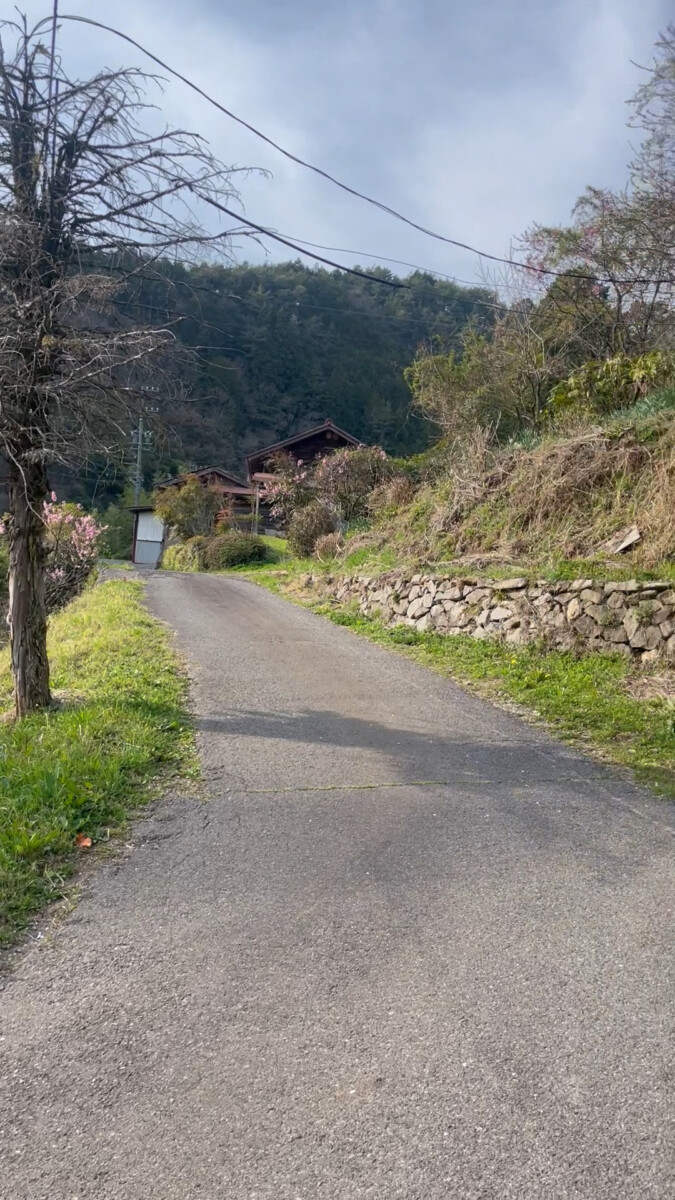
For the merchants who passed through Yaotsu, the Kurose Kaidō road — linking Kurose Port in Yaotsu Town (formerly Hosomoku Village) with Ena and the castle town of Naegi — was an indispensable route for the transport of goods.
Today, this same road lives on as Honmachi-dōri, Yaotsu’s main street, lined with sake breweries and traditional confectionery shops. At the foot of Yaotsu Bridge spanning the Kiso River, the site of Kurose Port still retains a stone lantern (jōyatō) erected in 1822 (the fifth year of the Bunsei era).
Among all the goods carried by river, salt held a place of particular importance in the history of Japan’s economic development. From ancient times through the modern era, salt was indispensable as a food preservative and seasoning. Its transport by water made it possible to supply both coastal producing regions and inland areas according to demand, making salt a commodity of vital importance to regional economies and people’s daily lives alike. Salt purchased from the Nagoya, Yokkaichi, and Kuwana areas was carried along the Kurose Kaidō to neighboring villages and the Naegi domain — a history that has led some to refer to this route as the “Salt Road.”
The Kiso River Basin Today
With the construction of dams and the development of railways and roads, river transport along the Kiso River gradually declined. Yet in the towns of the Kiso River basin, including Yaotsu, the historical and cultural legacy left by the waterway era remains deeply present.
In Yaotsu Town, materials and historic remains that allow visitors to learn about the history of river transport have been preserved, and are increasingly recognized as valuable tourism resources.
Experiences to Discover Yaotsu’s Legacy of Kiso River Trade
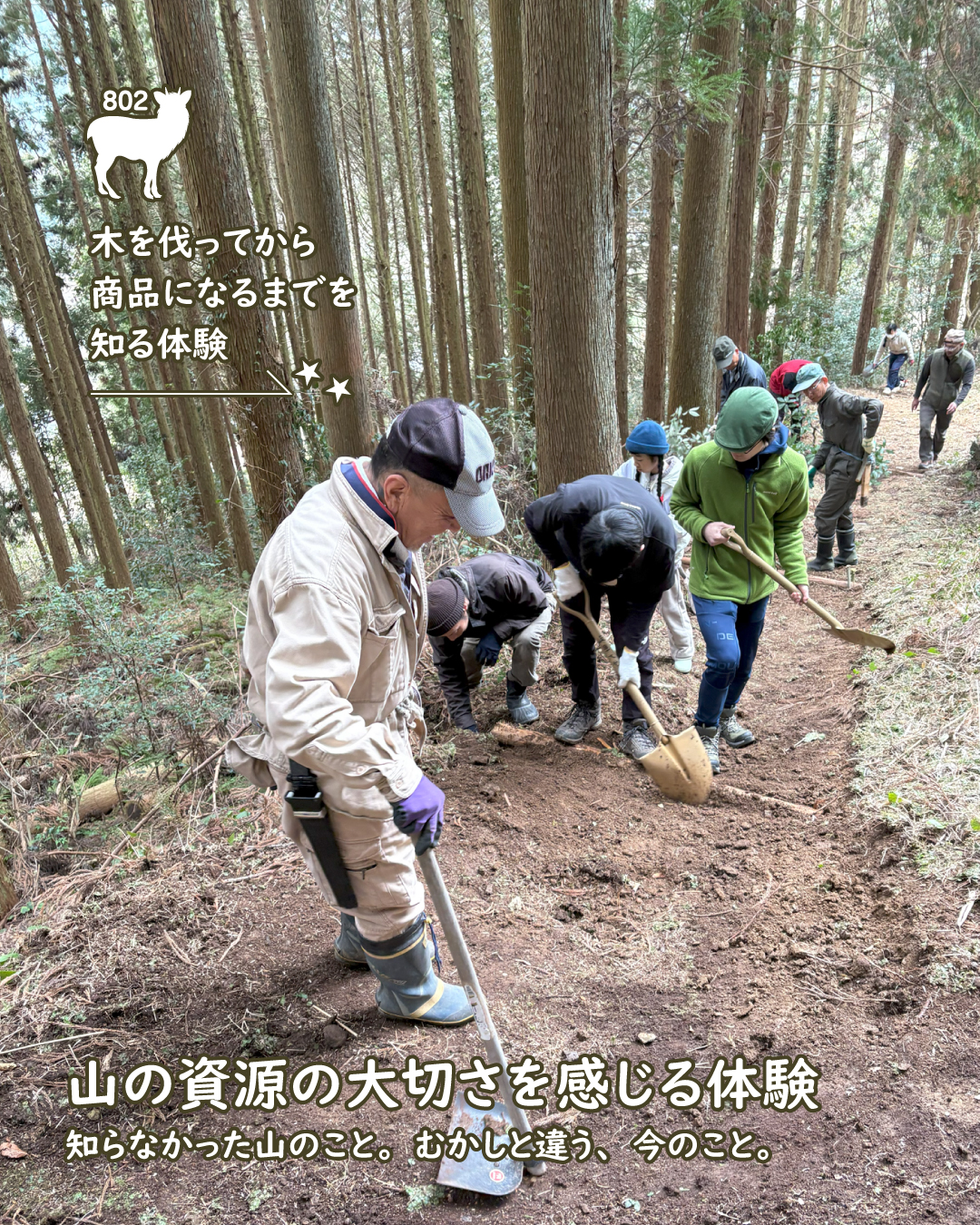
Experiences to Appreciate the Value of Mountain Resources
Cutting only the trees needed, then replanting. By drawing on the mountain’s resources and returning what has been taken, a balance between human life and the mountain environment has long been maintained. Bringing the forest closer to its ideal state leads to the creation of clean, delicious groundwater.
MORE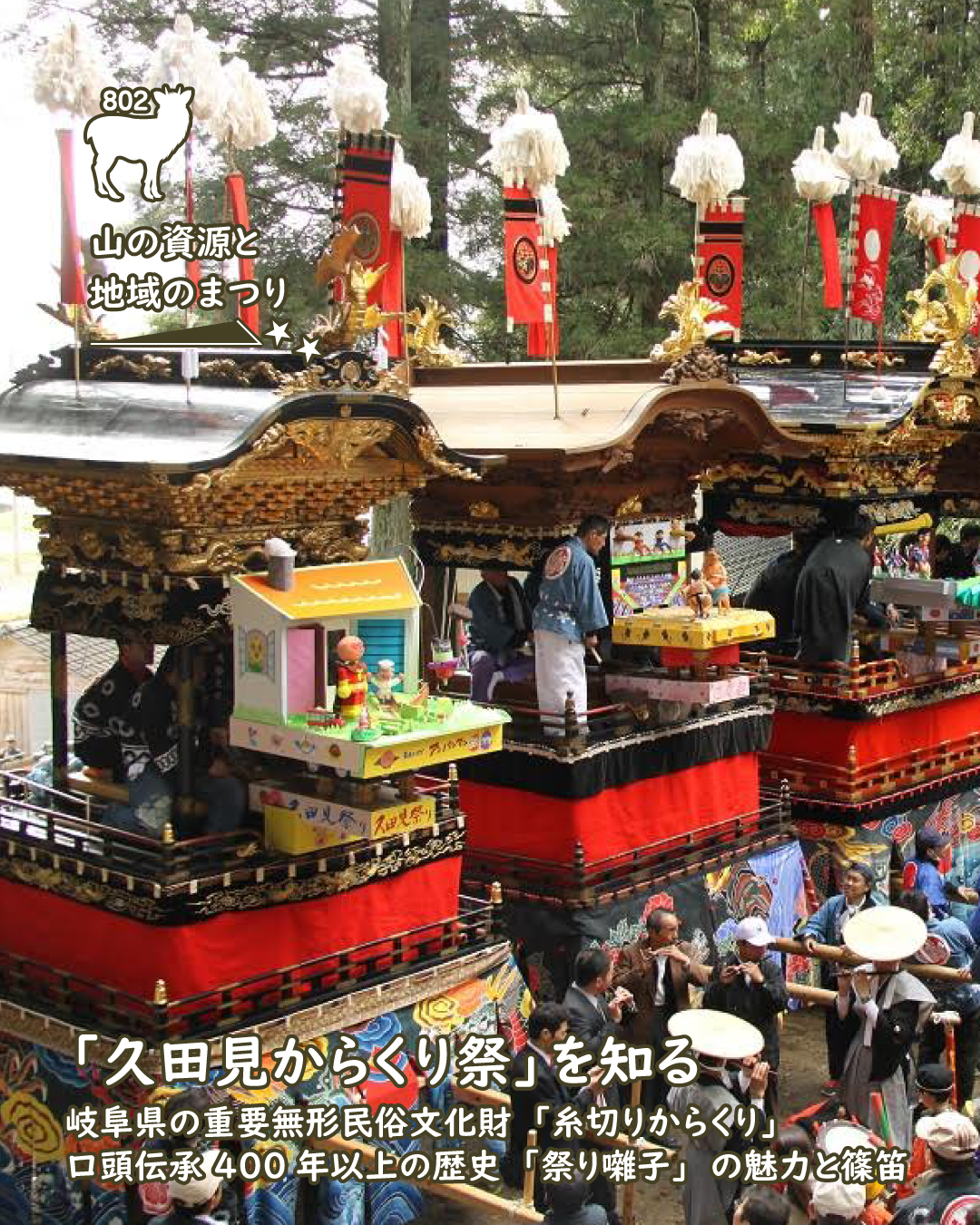
Discover the Kutami Karakuri Festival
The secret behind the movements of the mechanical dolls that appear in the Kutami Festival lies in a distinctive technique known as “ito-kiri karakuri” (thread-cutting mechanism). The festival has been recognized for its historical and artistic value.
MORE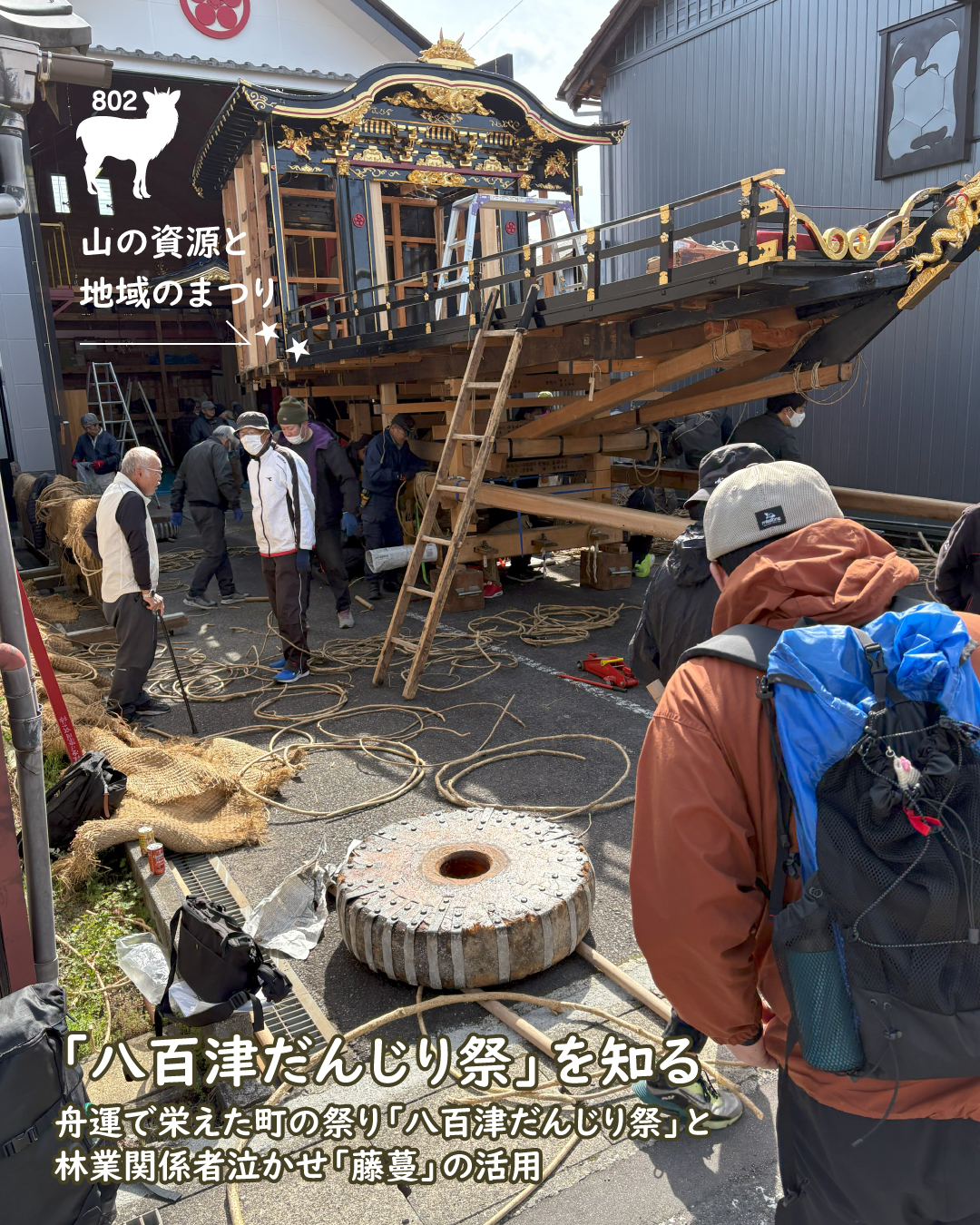
Mountain Resources and Local Festivals
The skill of binding timber gathered at Nishiori Tsunaba into rafts using wisteria vine — to be floated downstream toward Inuyama — offers a glimpse of how human activity making use of mountain resources and the forest environment were once held in careful balance.
MORE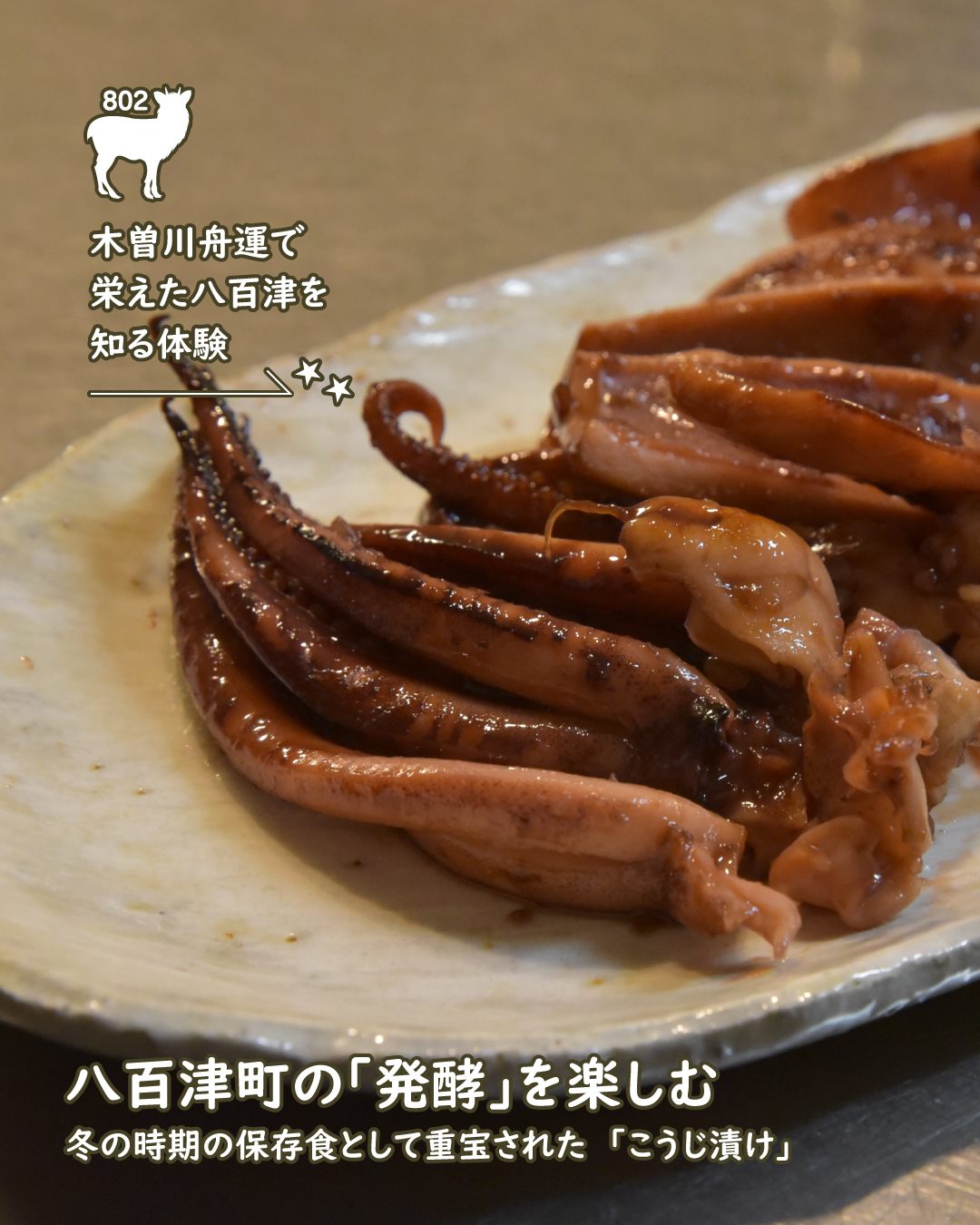
Enjoy the World of Fermentation in Yaotsu Town
Originally created as a winter preserve for times when fresh ingredients were scarce, “koji-zuke” pickles were born out of necessity — a way to obtain protein during the lean winter months. Wild birds, dried squid, and deep-fried tofu were among the primary ingredients used.
MORE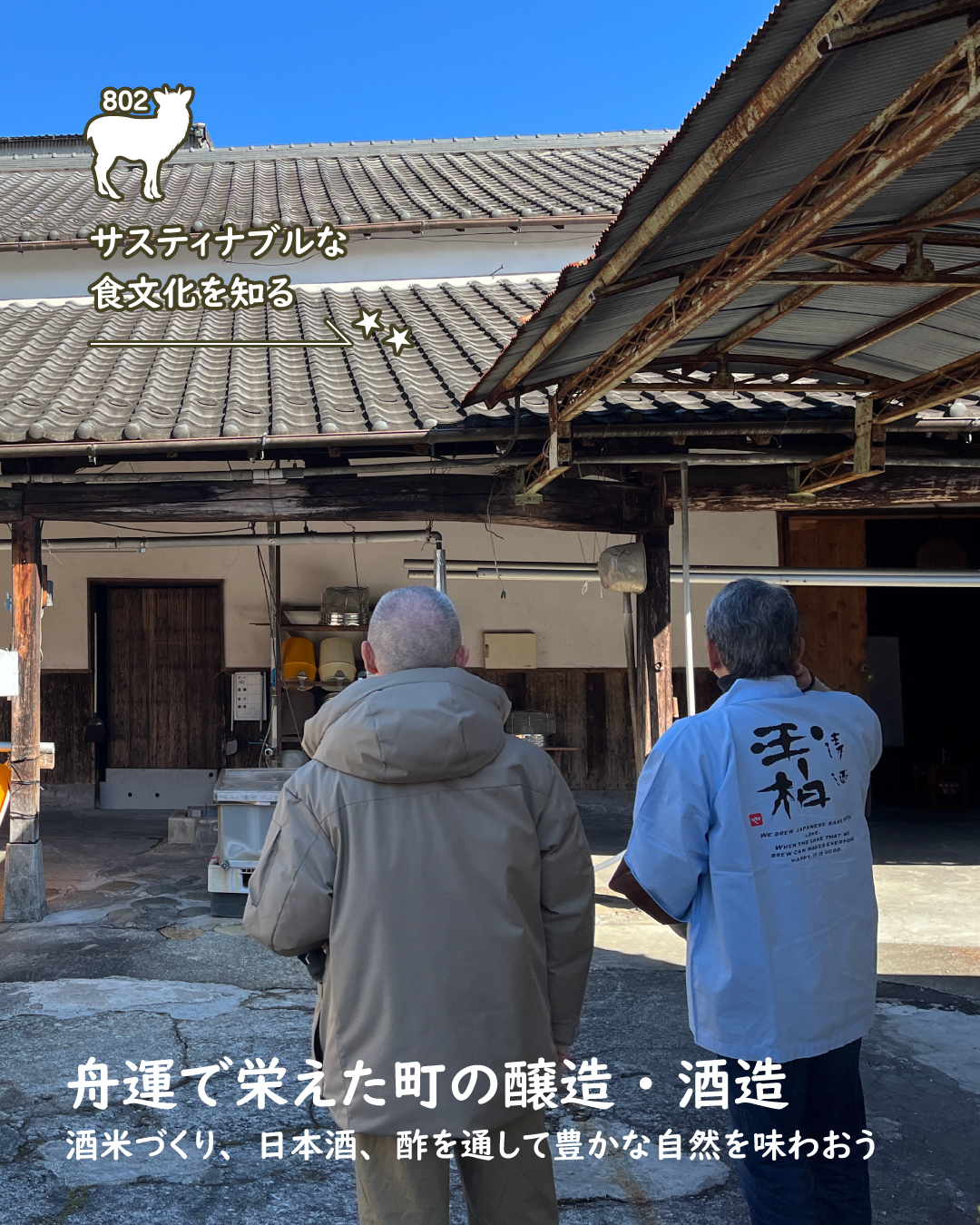
Enjoy Local Sake from Yaotsu Town’s Two Breweries
The quality of the water used in brewing has a profound influence on fermentation, which is why brewers pay close attention to maintaining their water sources. A well-preserved natural environment at the headwaters has a direct and positive impact on sake production.
MORE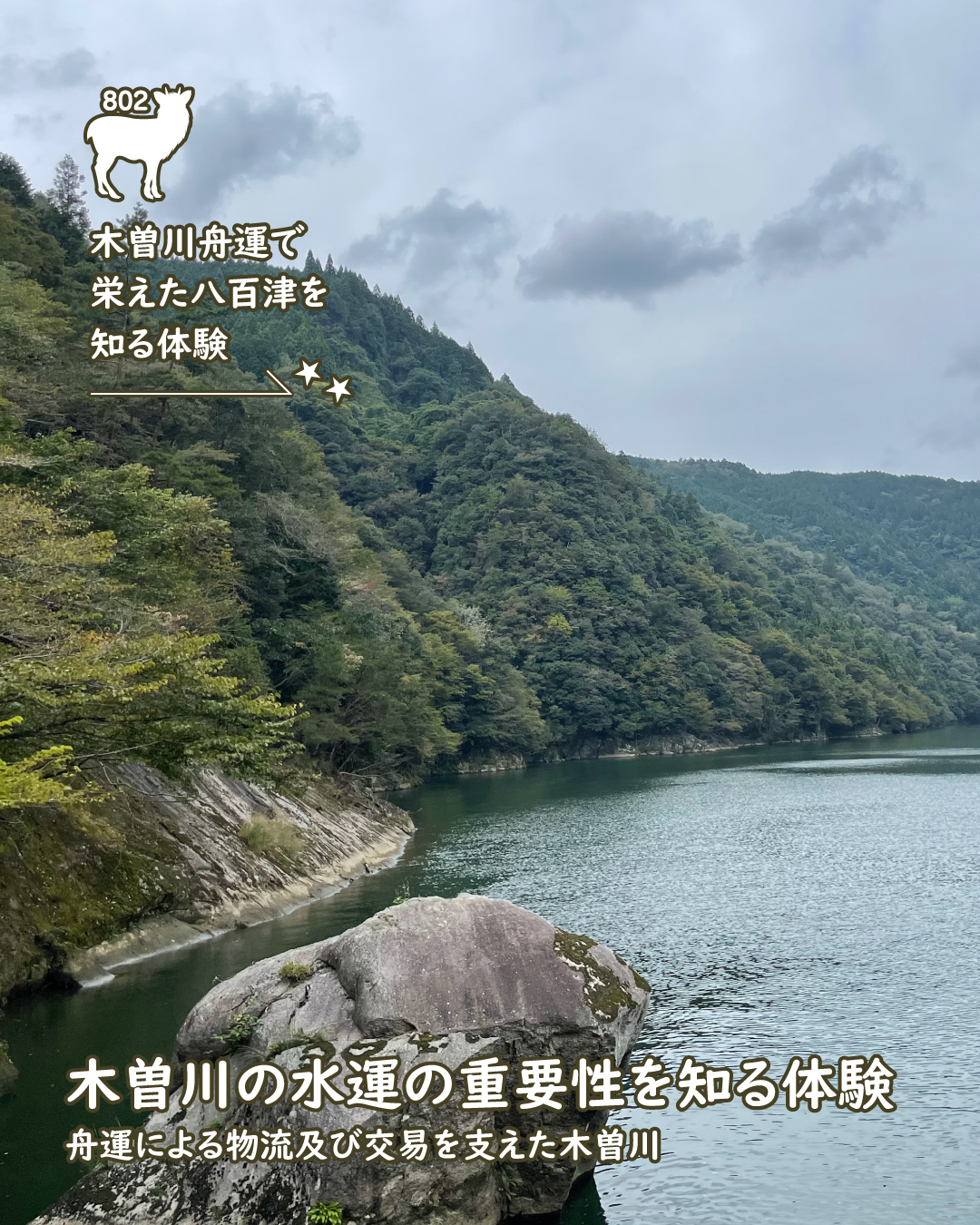
Learn About the Vital Role of the Kiso River Waterway
Yaotsu was once a key hub where timber felled in the upper reaches of the Kiso River was assembled into rafts, and at the same time a place where all manner of goods were traded. The transport of goods by river is known as “shuun” — river freight.
MORE
-
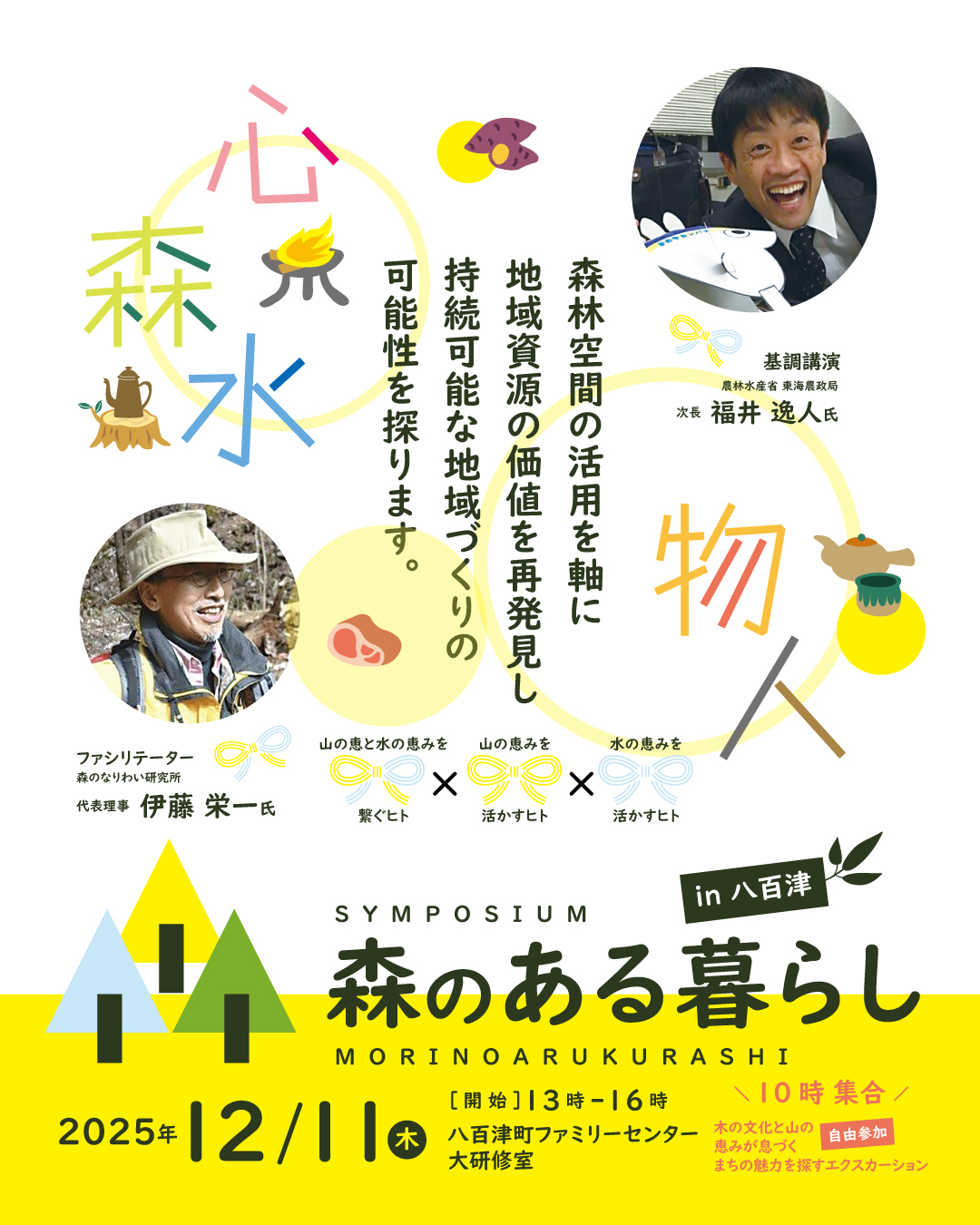
Symposium: Living with the Forest
Yaotsu is a town where forests cover approximately 80% of the land — a place shaped by the gifts of forest and water. Within this rich natural environment, people have built their lives and cultivated a culture sustained by the forest and the rivers that flow through it. This symposium explores the value of local […]
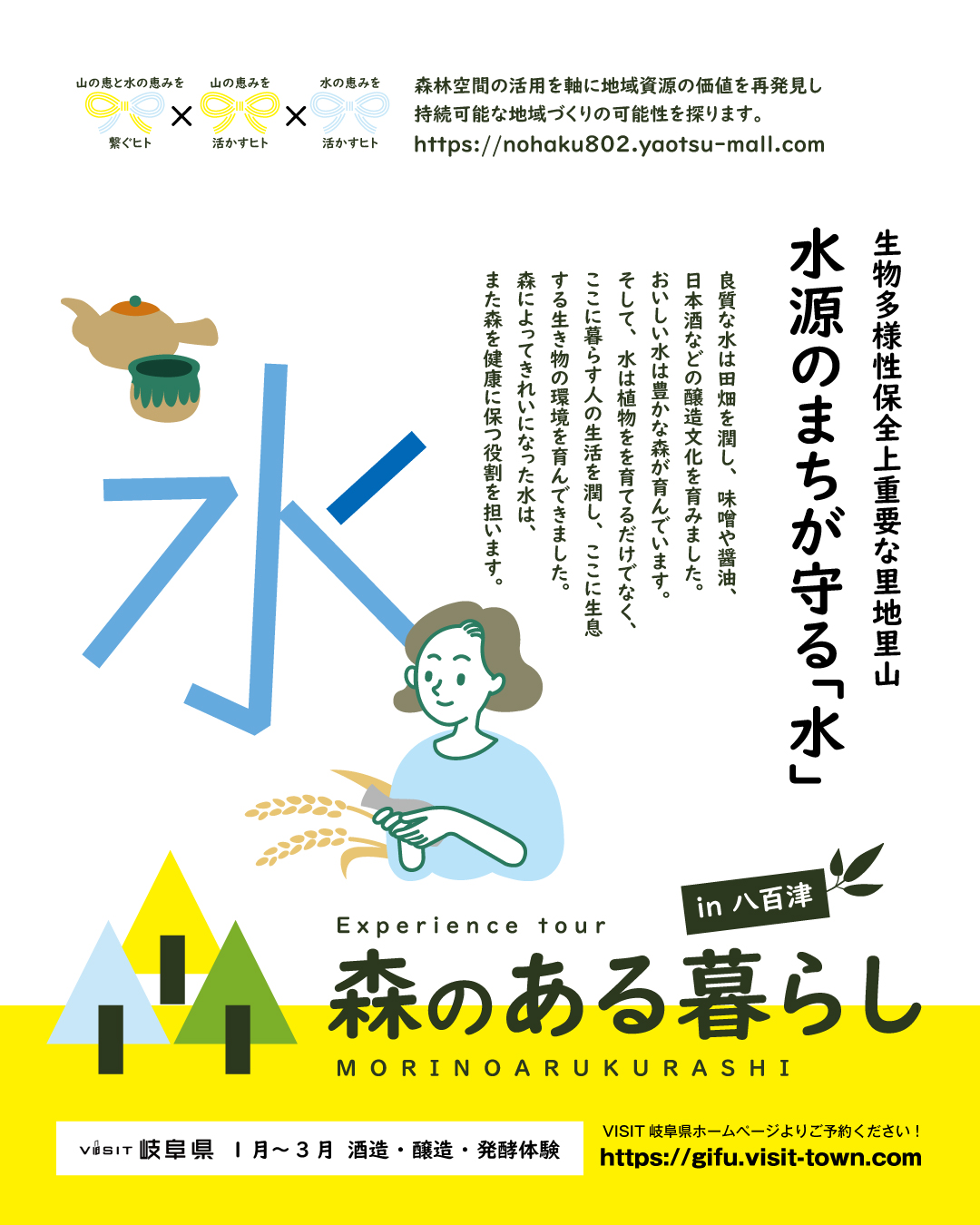
Living with the Forest — Seasonal Experiences
History and culture reveal the deep ties between forest and everyday life. To carry that relationship forward into the future in the best possible form — this program offers a town walk through Yaotsu’s history, culture, and natural environment using AR on your smartphone. You’ll also have the chance to experience local industries firsthand, including […]